
Marcus Völkel, founder of QUALLEE and UX research expert with 25 years of experience, explains how AI-powered interviews democratize qualitative research. The tool reduces costs from €12,500-20,000 to a fraction and enables researching multiple target groups in parallel. The limits are clear: AI automates the grunt work, not the strategic interpretation.
Part 1: The Vision
QUALLEE promises "Qualitative research in hours, not weeks." That sounds almost too good. What's the catch?
No catch, but an important misconception I want to address: QUALLEE doesn't replace research – it democratizes it. The catch with traditional qualitative research has always been: It's so damn expensive and time-consuming that only large companies can afford it. €12,500 to €20,000 for ten interviews. The result? Teams make decisions based on assumptions rather than real user voices. That's the real scandal.
You have over 20 years of research experience. Weren't you concerned about essentially automating your own expertise?
Honestly? At first, yes. But then I understood: I'm not automating expertise – I'm automating the grunt work. Recruitment, scheduling, transcription, initial clustering. That used to cost me weeks. The real expertise – the strategic interpretation, the "What does this mean for our product?" – that stays with humans. QUALLEE gives me superpowers; it doesn't replace me.
What exactly does QUALLEE automate?
- Recruitment and scheduling
- Conducting interviews in 5 languages
- Automatic transcription
- Initial clustering and theme extraction
- Export as PDF, Excel, or for further analysis
Why Claude Opus as the foundation? There are cheaper models.
Because I don't want superficial answers. I've experimented with many models. Claude understands context. It asks the right follow-up questions. When someone says "Yeah, the tool is okay," Claude probes: "What exactly makes it okay? When was a moment that surprised you?" That's the difference between collecting opinions and understanding motivations.
Your claim is "Dialogue over assumptions." But is an AI interview really a dialogue?
That's the question that keeps me up at night – in the best sense. And my answer is: Yes, but a different kind. People tell an AI things they wouldn't tell a human interviewer. No fear of judgment, no social desirability bias. We've received quotes like "I can really open up, it's anonymous, I'm not afraid of hurting anyone." That's a different quality of honesty.
Who is QUALLEE not suitable for?
Anyone who thinks research is a checkbox on a list. "We did research" – that doesn't interest me. QUALLEE is for teams that really want to understand why their users behave the way they do. And who are willing to throw their assumptions overboard when the data says otherwise.
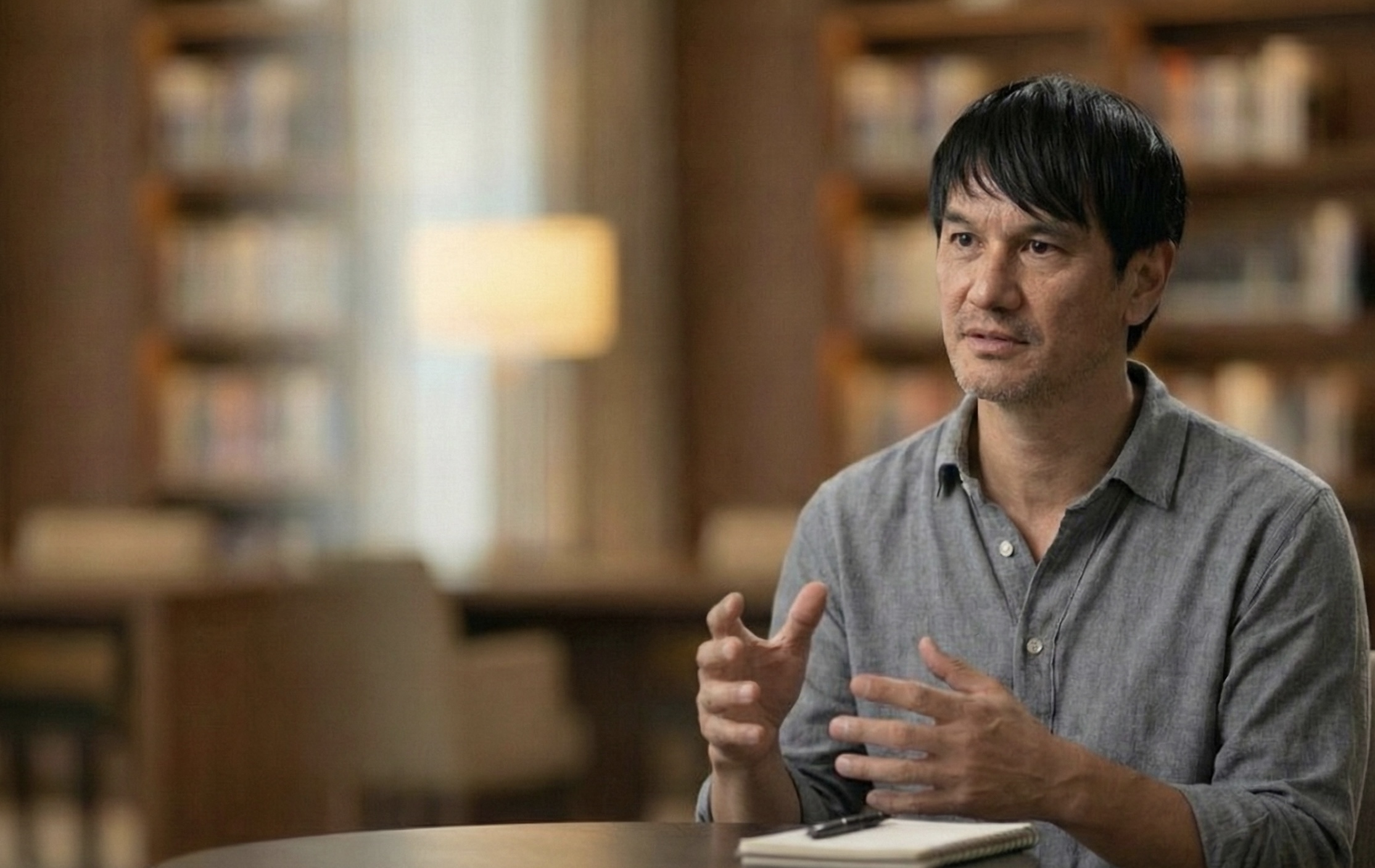 Marcus is convinced: Great products are built in dialogue with real people.
A personal question: What would the Marcus from 20 years ago, who founded his first research agency, say about QUALLEE?
He'd probably say: "Finally. Finally, we can stop having to choose between depth and reach. And now we have a tool that brings research to places where it wasn't possible before – whether due to budget, time, or acceptance constraints." Twenty years ago, qualitative research was artisanal, intimate, but also exclusive. With QUALLEE, we can have both: the depth of a real conversation and the scalability of digital tools. This isn't a revolution – it's evolution. The logical progression of what I've always believed: Good products are built in dialogue with real people.
Part 2: The Criticism
Your own blog article says: "AI summarizes superficially, is too positive, and doesn't understand body language." Aren't you selling a product you yourself criticize?
Ha, you read the article! Yes, AI has limitations, and anyone who ignores them builds crap. But QUALLEE isn't "AI replaces research." QUALLEE is "AI handles the grunt work so humans can do the important stuff."
The yes-man problem? It exists. That's why we developed prompting strategies that make Claude probe even with positive answers. The superficial summaries? That's why we don't deliver summaries – we deliver verbatim quotes, the raw voice of the user. The researcher interprets.
You say qualitative research costs €12,500 to €20,000. But you offer a starter plan for €149 per month. How can that be the same quality?
It isn't. And I would never claim it is. What I claim: For many teams, the alternative to QUALLEE isn't a "€20,000 study" – the alternative is "no research at all." Or three interviews that aren't meaningful. Or a survey that doesn't capture the "why."
For many teams, the alternative to QUALLEE isn't a "€20,000 study" – the alternative is "no research at all."
QUALLEE democratizes access. A startup can't afford a research agency. But it can conduct 30 AI interviews and recognize real patterns. That's not perfect – but it's infinitely better than assumptions.
Your article mentions the "yes-man problem": AI-generated synthetic users praise everything. How do you know your AI Researcher isn't doing the same: telling participants what they want to hear?
Because we're not surveying synthetic users. We're surveying real people. The yes-man effect with synthetic personas occurs because AI is trained on positive data. Real people don't have training data. They have frustration, workarounds, unmet needs.
The art is to tease these out. And paradoxically, the anonymity of the AI interview helps: People tell an AI things they wouldn't tell a human interviewer. Less social desirability, more honesty.
Part 3: The Reality
You list billion-dollar failures that qualitative research could have prevented. But all these companies had research teams. What makes you so sure QUALLEE users won't make the same mistakes?
Nothing. And that's important to understand: QUALLEE is a tool, not an oracle. If a team ignores insights because they don't fit the roadmap, there's nothing I can do about it.
What I can do: Lower the barrier to generating insights in the first place. With Windows 8, the problem wasn't "too little research," but that power users weren't in the samples. Because traditional research is expensive and you have to choose one target group.
With QUALLEE, you can survey three, four, five segments in parallel. Casual users AND power users AND switchers AND new customers AND employees. That doesn't change human tendency to ignore uncomfortable truths. But it increases the chance that they come to light at all.
Last question: If AI-powered interviews are so good, why do you also offer "guided projects"? Don't you trust your own tool?
On the contrary! I trust my tool so much that I know where its limits are. Some research questions are complex. Sometimes you need someone with 20 years of experience to ask the right questions. Sometimes the stakeholder workshop is more important than the data.
And honestly: The best insights often emerge hybrid. AI for volume and speed, human expertise for depth and strategy. That's not a contradiction for me. Actually, it's the best of both worlds.
The Key Numbers
| Metric | Value |
|---|---|
| Cost savings vs. traditional research | 70-80% |
| AI vs. human analyst agreement | 81% |
| Traditional study costs | €12,500-20,000 |
| Human analysis time per interview | 2-3 hours |
| AI analysis time per interview | Minutes |
| Supported languages | 5 (DE, EN, FR, ES, IT) |
Try It Yourself
Curious? Experience what an AI-led interview feels like. In our current research project, we're investigating how people interact with AI in their daily lives.
Frequently Asked Questions
What is QUALLEE and how does it work?
QUALLEE is an AI-powered tool for qualitative user research. It conducts automated in-depth interviews that feel like real conversations. The AI asks adaptive follow-up questions based on responses and automatically extracts themes and patterns from the conversations.
Does QUALLEE replace human UX researchers?
No. QUALLEE automates the grunt work (recruitment, scheduling, transcription, initial clustering), but strategic interpretation remains with humans. The best results emerge hybrid: AI for volume and speed, human expertise for depth and strategy.
How accurate is AI analysis compared to human analysts?
Studies like the British Election Study show 81% agreement between AI and human analysts.
What does qualitative research cost with QUALLEE vs. traditional methods?
Traditional qualitative research costs €12,500-20,000 for ten interviews. QUALLEE reduces these costs by 70-80% without sacrificing the depth of real conversations. For many teams, the alternative to QUALLEE isn't the expensive agency – it's no research at all.
Why do people tell an AI more than a human interviewer?
The anonymity of AI interviews reduces social desirability bias. People aren't afraid of judgment or hurting someone. Users report: "I can really open up, it's anonymous." This leads to more honest answers about frustrations and unmet needs.
This interview was conducted in German and machine-translated into other languages using DeepL.